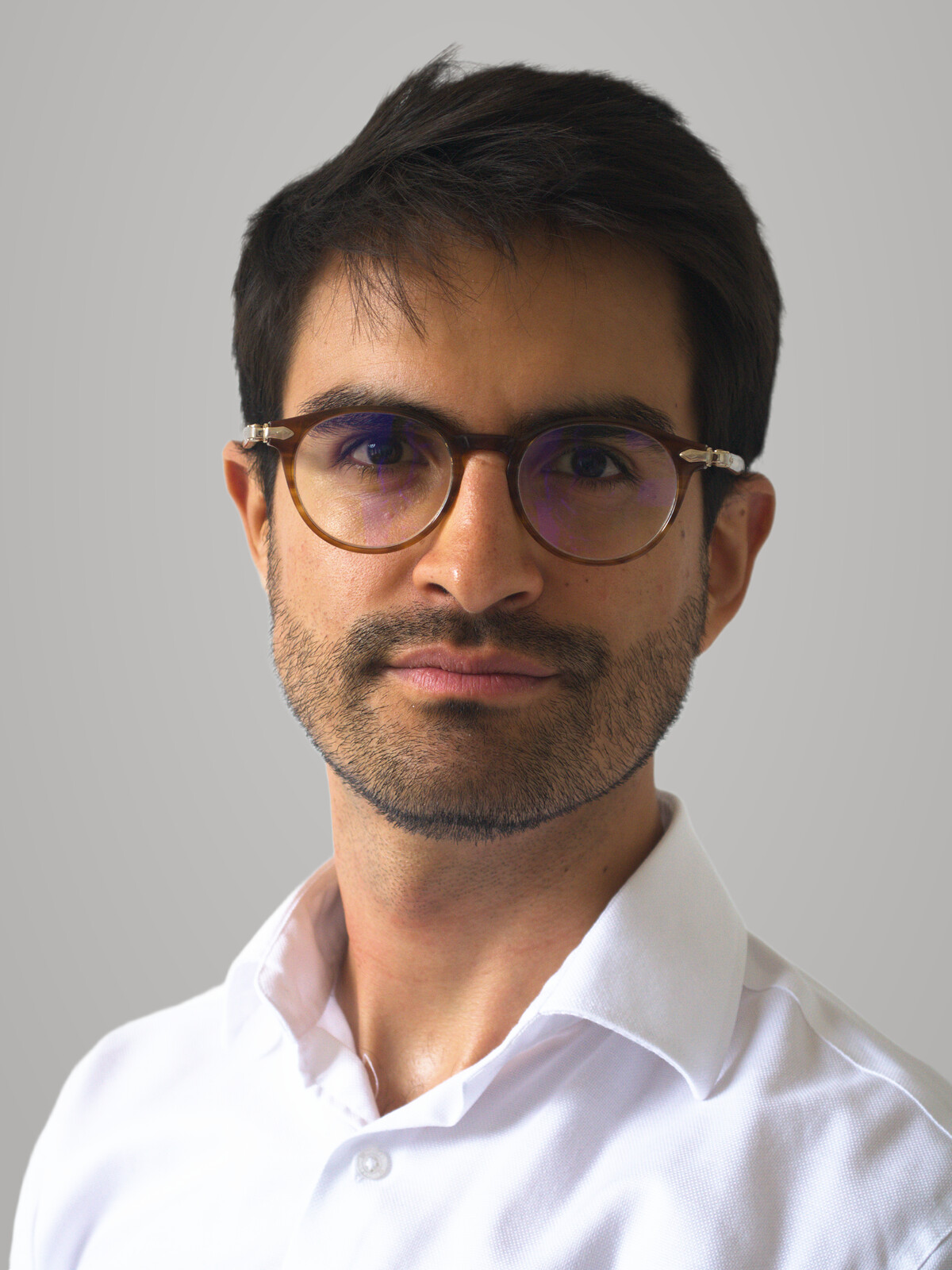
Profile
I am a computational scientist with five years’ experience in the mathematical modelling of biological and mechanical systems. I specialise in finite element and multiphysics simulation, from the mathematical model to validated open-source code, and in the statistical design of simulation studies. I have published seven peer-reviewed articles (six as first author), and I am used to working on interdisciplinary projects end to end and communicating complex results.
I am based in Nice, France, and I am looking for industrial R&D roles in numerical simulation, computational biology or scientific software.
Download my CV (PDF) Contact me
What I do
- Finite element and multiphysics simulation: nonlinear and moving-boundary problems, custom elements and solvers (FEniCSx, Code_Aster, Abaqus UEL, Gmsh).
- Mechanobiology: models of cell migration and cancer invasion that couple mechanics and biochemistry on evolving geometries.
- Bio-inspired design: generative design of contact interfaces based on the growth rules of synovial joints.
- Design of experiments: response-surface metamodels that show which parameters drive a simulated outcome.
- Scientific computing: simulation campaigns on computing clusters (Slurm, MPI), profiling and optimisation of Python code.
Current work
I am a postdoctoral researcher at Université Côte d’Azur, in the Laboratoire Jean Alexandre Dieudonné, working with Rachele Allena and Frédéric Luton, in collaboration with Anotida Madzvamuse and Francesca Ballatore.
I study how tumour cells interact with the basement membrane, a thin yet stiff extracellular matrix that plays a central role in tissue organisation and cancer invasion, and how cells squeeze through narrow constrictions. Both problems couple mechanics and biochemistry within highly deformable, evolving domains, which I model with geometric surface partial differential equations solved in FEniCSx. This work has led to two first-author articles in 2026, in the Journal of the Royal Society Interface and PLOS Computational Biology, and to two articles in preparation. The code for the published work is open source: FilopodiaToPores and ConfinedCellMigration.
How I use models
A model is a simplified description of reality, and the biological measurements needed to fit its parameters vary strongly from one case to another or are simply not available. So rather than reproducing one experiment quantitatively, I use mathematical modelling as a comparative tool: I explore the parameter space systematically and define objective metrics to identify which mechanisms drive the behaviour of the system.
Simulation videos are on the Portfolio page, articles on the Publications page, and the full CV is online and in PDF.